Custom Software Development in South Africa
Custom software is an application built for how your organisation already works — or how it needs to work — rather than forcing the business into a generic product. Cyber Developers is the custom software company that designs that application, connects it to the tools you already use, and stays available after go-live.
What custom software development is
It is software with named users, records, statuses and reports. Staff capture work in it. Managers trust numbers from it. Customers or partners may log in. That is different from a brochure website, and it is different from an off-the-shelf package that almost fits except for the exceptions that are the real business.
When people search for a custom software company in South Africa, they usually need developers who can model those exceptions — permissions, documents, billing, field capture — not a theme with a contact form.
When custom software makes sense
- Operational work still lives in spreadsheets, paper or WhatsApp groups.
- Off-the-shelf software almost fits, but the exceptions are the real business.
- Several tools hold overlapping records and nobody trusts a single report.
- Staff, customers or field users need different access to the same process.
- You already know the process; you need it on a computer with an audit trail.
If a packaged product already produces the three reports a manager asks for every week, buy it. If a shadow spreadsheet is the real system, you are in custom territory. Read custom versus off-the-shelf and what actually drives cost.
What Cyber Developers builds
The labels below are the same jobs, described from different angles. A school platform is custom business software, a set of web applications, and an integration project. We do not sell them as unrelated products.
Business systems
Day-to-day administration: people, cases, money, documents and reporting. See business systems and examples such as Legacy Care and LawTech SA.
Workflow platforms
Named stages, owners, SLA checks and finance locks. Tshira is the public example; the workflow automation page explains the pattern.
Web applications
Authenticated portals for staff, customers, parents, citizens or drivers. VayaSA, SmartCity Muni and the school portals are web applications with real roles. Web application development.
Mobile applications
Where the user is moving. FluxMove includes an Expo driver app alongside the web marketplace. VayaSA is built to be used on a phone. We do not claim native iOS/Android store apps for every product. Mobile app development.
Integrations
Payments, SMS, email, identity checks and existing databases, so information is not retyped. Payment processors used on our platforms include Paystack, Ozow and Capitec Pay where those projects required them. Systems integration.
Reporting
Numbers that come from the same records operators use. Tshira’s reports cover cases, SLA and finance. School platforms produce statements, debtors and report cards from the student file.
Authentication and permissions
The finance user is not the field user. SchoolHub SA, Tshira, VayaSA and LawTech SA all separate roles on the same data.
Deployment and support
Hosting, backups, user issues and change requests are part of the work. Hours and response times are written into the project. We do not advertise 24/7 cover for every client.
Development process
Discovery
Users, records, exceptions, integrations and the reports managers actually need.
Architecture
A data model and permissions that can survive real work, not only the demo script.
Interface
Screens that match the jobs. Operators look at them before the system is frozen.
Build
Iterative development against the process, with unhappy paths in the test plan.
Go-live
Hosting, backups, accounts and notes for the team.
Support
Fixes and change requests after the first week of real use.
Technology
We choose tools from what we already run in production, not from a trend list. Common stacks on Cyber Developers systems include React, Next.js, TypeScript, Node.js, Python, C# / ASP.NET Core, PostgreSQL, Prisma, Azure, Firebase, Railway and Cloudflare. The school, workflow, logistics and transport products are Next.js and PostgreSQL. SmartCity Muni is a React application. FluxMove’s driver client uses Expo where that module is in play.
South African considerations
Projects here usually involve ZAR pricing, POPIA-minded records, local payment options, South African identity numbers, and users on mixed office and mobile connections. We have already modelled those constraints on products such as VayaSA, FluxMove and SchoolHub SA. We do not create fake city pages or claim offices we do not have. The company works from 357 Oak Ave, Ferndale, Randburg, and builds for organisations across South Africa.
Software we have actually built
Proof is the product, not a slogan. These systems are documented on Our Work with screenshots from the live interfaces. We do not invent outcomes, traffic figures or unnamed clients.
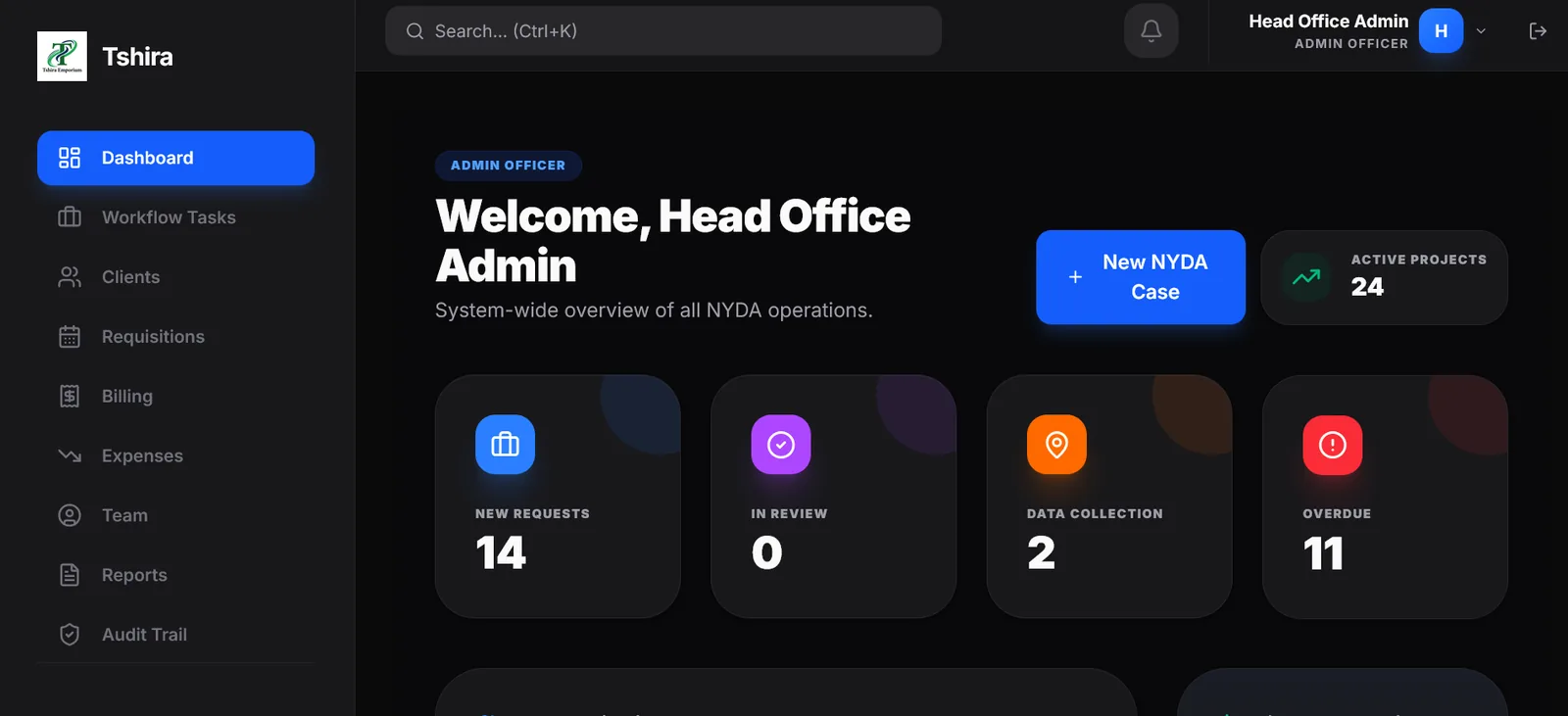
Workflow platform
Tshira Workflow
Cases, provincial assignment, field collection, review, SLA monitoring, requisitions, expenses and invoicing.
- Workflow
- SLA
- Finance
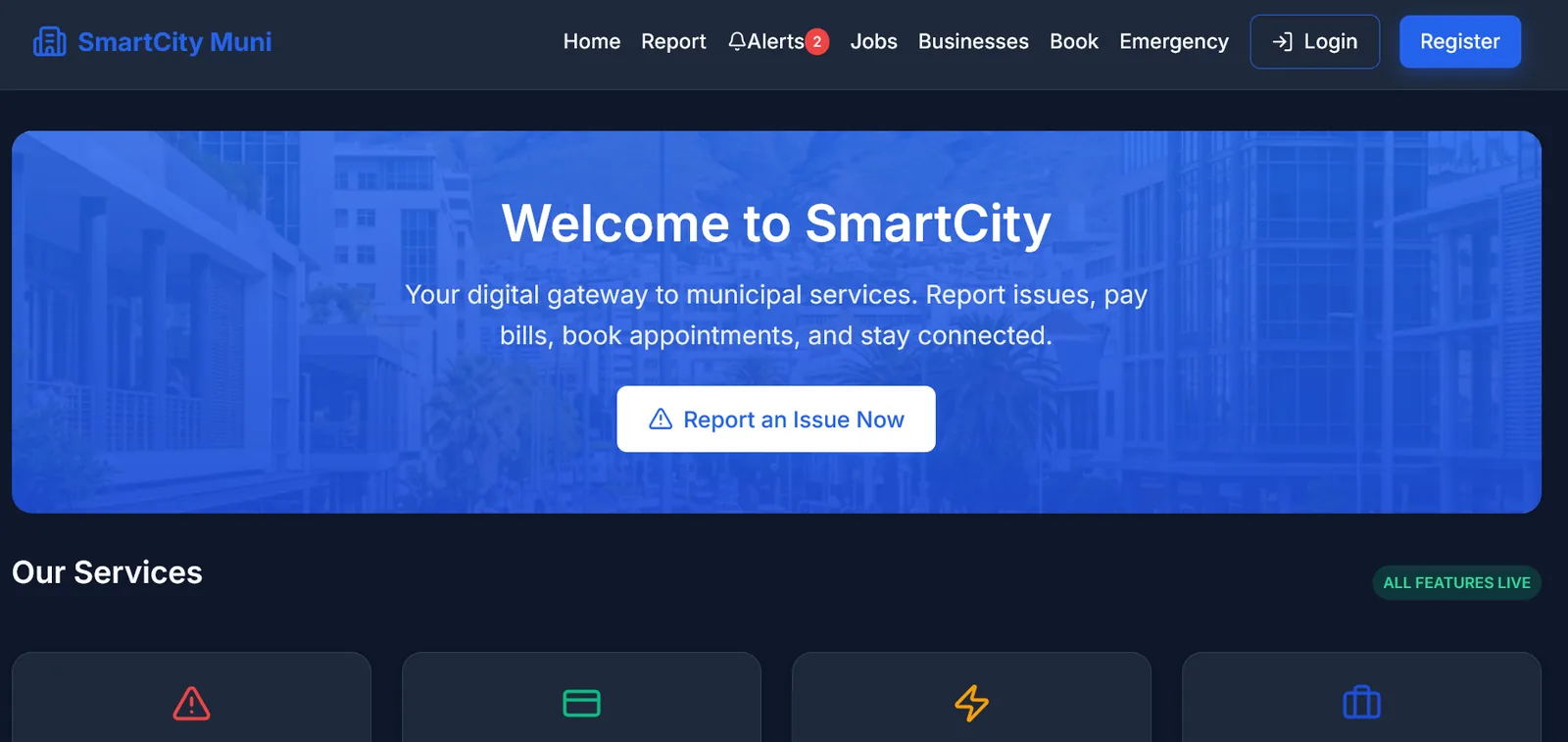
Citizen services
SmartCity Muni
Issue reporting, service requests, alerts, emergency information, queue booking, notices, jobs and a business directory.
- Citizen portal
- Faults
- Queues
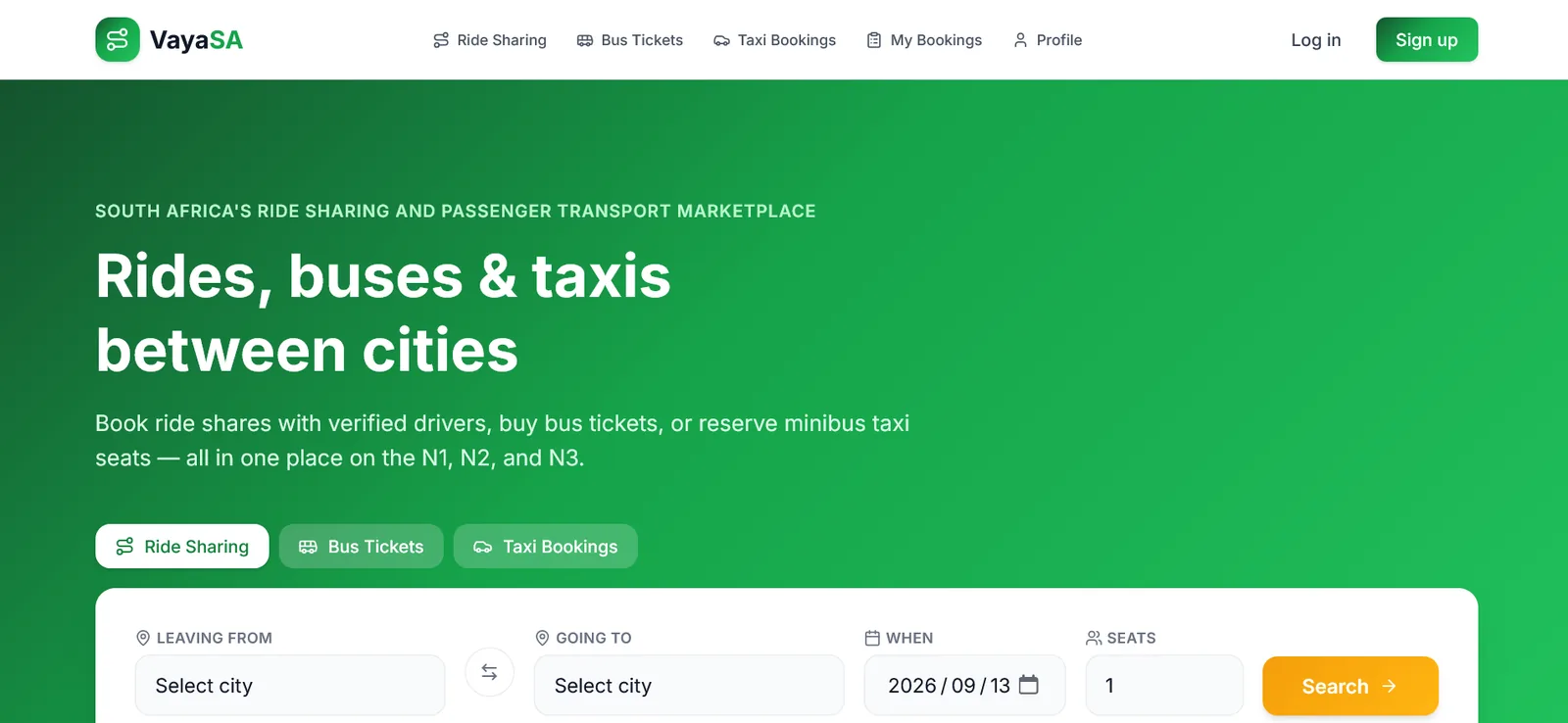
Transport marketplace
VayaSA
Ride sharing, bus tickets and taxi seats, with verification and South African payment options used on that product.
- Bookings
- Operators
- Payments
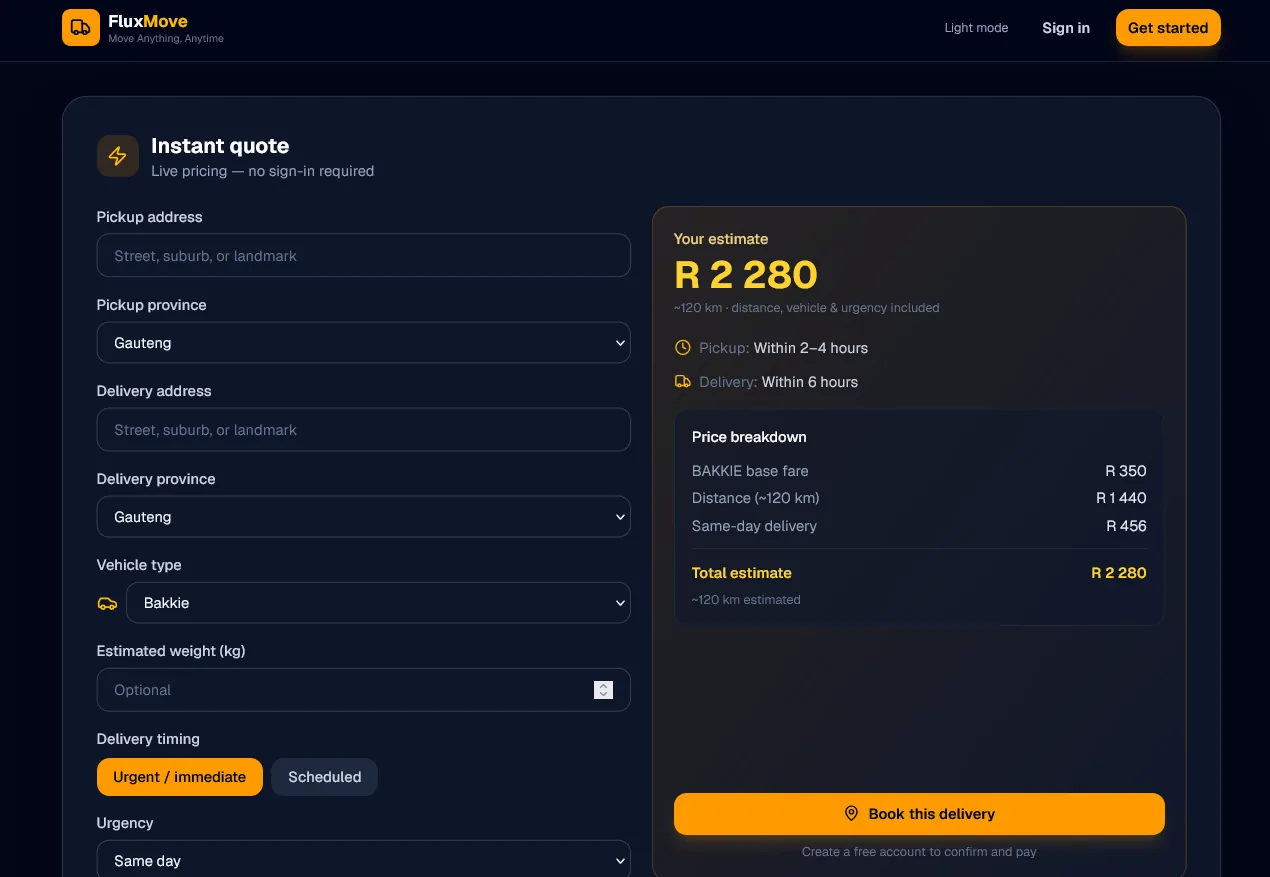
Logistics platform
FluxMove
Instant quotations, vehicle selection, booking, drivers and business accounts.
- Quotes
- Vehicles
- Drivers

Legal practice
LawTech SA
Clients, matters, invoices, fee book, trust accounts and debt collection.
- Matters
- Trust
- Invoices

Funeral operations
Legacy Care
Members, policies, premium collections, arrears, claims, mortuary, inventory, fleet and finance.
- Members
- Collections
- Claims

Education
School Management System
Role-based portals for admissions, students, attendance, fees, staff and reporting.
- Students
- Fees
- Portals
Questions
If yours is not here, put it on the enquiry form.
How long does custom software take?
It depends on scope. A focused workflow tool and a multi-portal school or logistics platform are different efforts. Discovery produces a realistic sequence rather than a slogan timeline.
Do you rebuild everything from scratch?
Not always. If an existing Cyber Developers system is close, we customise it. If the process is unique, we design a new model.
Will we own the system?
Project terms are agreed in writing. The usual intent is that you operate a system built for your organisation, with source and hosting arrangements documented for that engagement.
Do you work only in Johannesburg?
The office is in Ferndale, Randburg. We build for organisations across South Africa. We do not list fake regional offices.
Talk to Our Developers
Describe the process you want on a computer. We will say whether to build, adapt something we already have, or leave it.